
Silfio country intelligence · SRB
Serbia
0.9% annual new-conflict probability
How to read these probabilities: Scores estimate the probability of a new armed conflict starting within the next 12 months. Ongoing conflicts can have a saturation effect, reducing the modelled probability of an additional conflict onset. A low or falling score does not imply less severe ongoing fighting or a safer country.
Population
6.55M
GDP
$99.95B
Currency
RSD
Capital
Belgrade
Land area
88.36K km²
Official languages
Serbian
Risk assessment
Risk profile
The 12-month probability of a new armed-conflict onset on Serbia’s territory is 0.9%, representing a minimal risk. Serbia’s history of armed conflict in the 1990s, unresolved issues surrounding Kosovo, and persistent political polarisation remain relevant background factors. However, state capacity, functioning security institutions, and Serbia’s position as a relatively capable regional state provide important barriers to sustained domestic or interstate violence on its territory.
Recent reporting highlights two potentially relevant pressures rather than an active conflict. Serbia is expanding defence-industrial cooperation with Israel, including ammunition supplies and a drone assembly facility near Belgrade, while reporting ahead of elections describes heightened pressure on independent media, including litigation, online threats, and physical attacks. The principal actors are Serbia’s government and security institutions, domestic political groups, media organisations, and external defence partners.
The largest uncertainty is whether political confrontation could move from intimidation and sporadic violence into sustained organised armed activity, or whether tensions involving Kosovo could produce cross-border escalation reaching Serbia. Risk would rise with an organised armed incident, mobilisation around Kosovo, or prolonged violent unrest; it would be supported at its current minimal level by continued institutional control and the absence of reported sustained armed clashes on Serbian territory.
Strategic reasoning
- Serbia’s experience of the Yugoslav wars and the continuing Kosovo dispute create credible escalation pathways, but strong state institutions and security control make a new sustained conflict on Serbian territory difficult to initiate.
- Recent reports of pressure on media and physical attacks indicate political tension, while defence cooperation and arms production do not themselves show preparations for domestic conflict.
- Any fighting involving Serbian forces outside Serbia would not constitute the target event unless violence reached Serbian territory; the key stabilising signal is the absence of reported sustained armed conflict inside the country.
Critical indicators
- Recent reporting on Serbia’s defence cooperation with Israel describes ammunition supplies and a drone assembly facility near Belgrade linked to Elbit’s production network. This strengthens Serbia’s military-industrial ties but is not evidence of an armed-conflict onset at home.
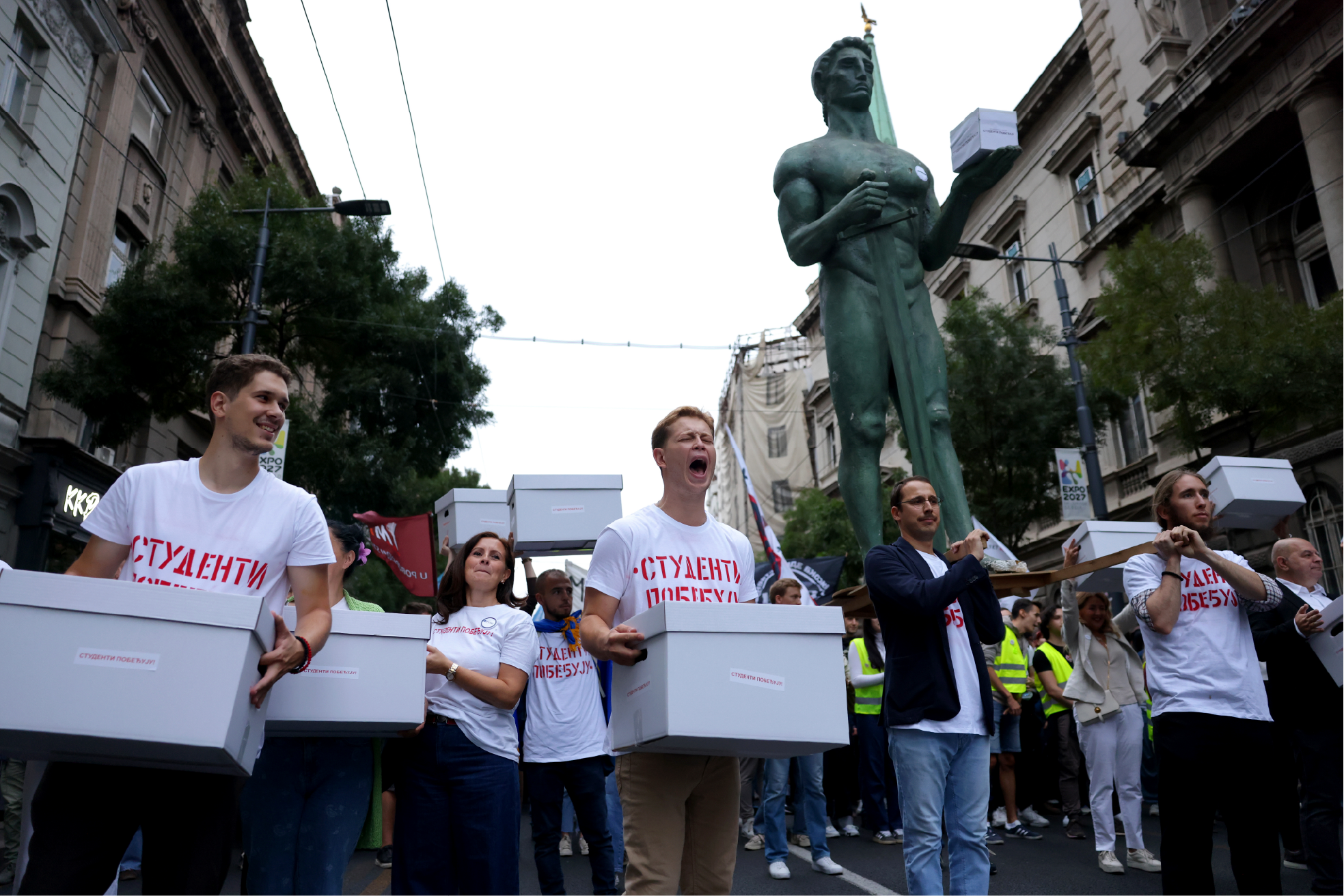
- Recent reporting ahead of Serbia’s elections says independent media faces intensified spurious litigation, online threats, and physical attacks. These developments show domestic political friction, but the reported activity remains coercive and sporadic rather than organised armed violence.
Probability trend
How the Serbia estimate has moved
Probability0.9%0.9%0.9%
Sep 30
Oct 5
Oct 12
Oct 15
Oct 19
Date
Current conflicts
Source: UCDP
No active conflicts in Serbia.
Regional context
Serbia compared with its neighbours and region
Serbia ranks number 114 of 196 in new conflict outbreak risk.
Land neighbours
Southeast Europe
Figures are each country's modelled probability of a new armed conflict on its territory within the next 12 months. Select any country to open its full profile.
Related coverage
lab.imedd.org