www.belfasttelegraph.co.uk
Silfio country intelligence · CMR
Cameroon
6.7% annual new-conflict probability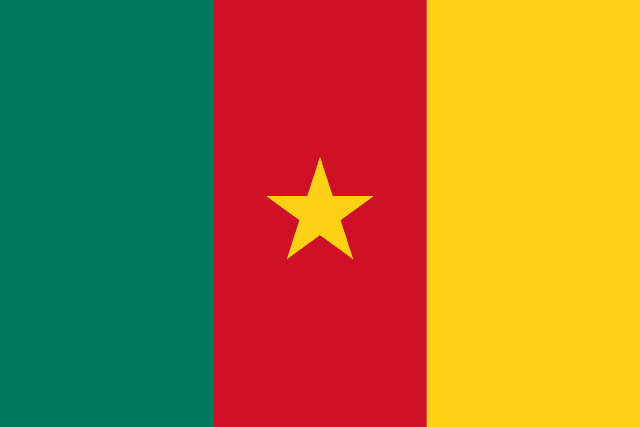
How to read these probabilities: Scores estimate the probability of a new armed conflict starting within the next 12 months. Ongoing conflicts can have a saturation effect, reducing the modelled probability of an additional conflict onset. A low or falling score does not imply less severe ongoing fighting or a safer country.
Population
29.88M
GDP
$58.93B
Currency
XAF
Capital
Yaoundé
Land area
475.44K km²
Official languages
English, French
Risk assessment
Risk profile
The 12-month probability of a new armed-conflict onset in Cameroon is 6.7%, representing a high risk. The principal long-run drivers are the country’s history of armed conflict, persistent institutional and political tensions, limited state reach in some regions, and unresolved grievances involving Anglophone communities. Existing violence in the Northwest and Southwest, alongside insecurity in the Far North, demonstrates the capacity for armed mobilisation, although continuation of those conflicts is not itself a new-onset event.
Recent reporting provides context on the international and political dimensions of the Anglophone crisis. A Belfast Telegraph investigation describes Jeffrey Donaldson’s past Ministry of Defence-related role, payments, and influence connected to the conflict, highlighting the sensitivity of the crisis and the involvement of external actors. Cameroon’s government, Anglophone separatist groups, and communities in the Northwest and Southwest remain the principal actors relevant to escalation.
The largest uncertainty is whether existing regional violence could broaden into a distinct new conflict on territory not already affected, or whether political management contains it. Risk would rise with major state–separatist clashes, organised violence spreading into new regions, or renewed insurgent mobilisation; credible negotiations, reduced abuses, and effective local security arrangements would lower the likelihood of a new onset.
Strategic reasoning
- Cameroon’s experience with the Anglophone insurgency and Boko Haram-linked violence shows that political grievances, weak trust in institutions, and armed-group networks can generate sustained conflict. These conditions support elevated onset risk even though ongoing fighting must be separated from a genuinely new conflict.
- The strongest current signal is the reporting on foreign-linked influence surrounding the Anglophone crisis, while the main stabilising factor is the continuing presence and capacity of state security institutions. The balance leaves escalation dependent on whether separatist mobilisation expands beyond established theatres.
Critical indicators
- A Belfast Telegraph investigation reported on Jeffrey Donaldson’s Ministry of Defence-related work, payments, and influence connected to Cameroon’s Anglophone crisis. The episode underscores the conflict’s international political links and the sensitivity of relations among the Cameroonian state, separatist actors, and outside parties.
- Cameroon’s continuing Anglophone conflict in the Northwest and Southwest remains the central relevant country factor. Its persistence supplies experienced armed networks and unresolved grievances, while any spread into previously unaffected territory would meet the definition of a new onset.
Probability trend
How the Cameroon estimate has moved
Probability6.7%6.7%6.7%
Sep 30
Oct 5
Oct 12
Oct 15
Oct 19
Date
Current conflicts
Source: UCDP · Data to 31 Aug 2026
Cameroon: Ambazonia
148Deaths (last 12 months)- Opposition
- Ambazonia insurgents
- Started
- 8 Dec 2017
Cameroon: Government
53Deaths (last 12 months)- Opposition
- JAS
- Started
- 4 Aug 2022
Cameroon: Islamic State
43Deaths (last 12 months)- Opposition
- IS
- Started
- 8 Jun 2025
Regional context
Cameroon compared with its neighbours and region
Cameroon ranks number 50 of 196 in new conflict outbreak risk.
Land neighbours
Figures are each country's modelled probability of a new armed conflict on its territory within the next 12 months. Select any country to open its full profile.