Silfio country intelligence · SYR
Syria
38.3% annual new-conflict probability
How to read these probabilities: Scores estimate the probability of a new armed conflict starting within the next 12 months. Ongoing conflicts can have a saturation effect, reducing the modelled probability of an additional conflict onset. A low or falling score does not imply less severe ongoing fighting or a safer country. Existing conflicts are assessed through scenario analysis.
Population
25.62M
GDP
$23.74B
Currency
SYP
Capital
Damascus
Land area
185.18K km²
Official languages
Arabic
Risk assessment
Risk profile
Syria faces a 38.3% 12-month probability of a new armed-conflict onset, a critical risk. The country’s recent history of civil war, fragmented armed authority, weakened institutions, economic exhaustion, and unresolved territorial and communal disputes leave it highly vulnerable to renewed organised violence. The post-2024 political transition has not removed the risks created by competing domestic forces and external military involvement.
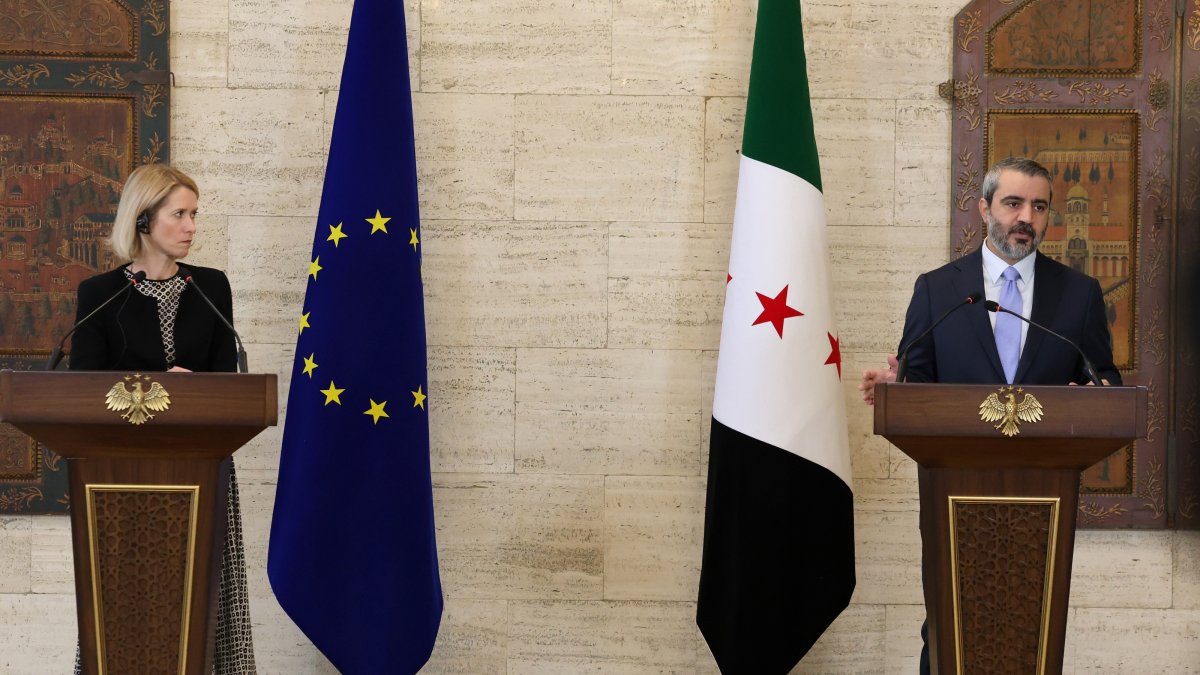
Recent reporting shows several active pressure points: Israeli raids and checkpoint activity in southern Syria, alleged Hezbollah efforts to deploy missile launchers near the Israeli border, Islamic State attacks on energy infrastructure in Deir ez-Zor, and security operations against ISIS and other armed networks. Damascus has also urged the EU to pressure Israel to halt attacks. Prediction markets separately implied 25.0% odds of Israeli military action by 31 October and 7.5% odds of Iranian targeting, while contracts resolving on 30 September were much lower.
The largest uncertainty is whether Damascus can contain armed networks while preventing Israeli, Iranian, or other external actions from producing sustained fighting on Syrian territory. Risk would rise most clearly after a lethal cross-border escalation, territorial seizure, or coordinated insurgent campaign; it would fall with durable de-escalation in the south and demonstrable consolidation of national security control.
Strategic reasoning
- Syria’s prolonged civil war, fragmented security institutions, economic weakness, and unresolved armed-group presence make local disputes more likely to escalate into sustained violence.
- Israeli activity in southern Syria and alleged Hezbollah preparations provide the clearest interstate escalatory pathway, while Damascus’s arrests of ISIS and Hezbollah-linked cells show an active but still incomplete containment effort.
- Attacks on energy infrastructure and counterterrorism operations are ongoing security problems, but they matter to this assessment chiefly insofar as they could develop into a new organised conflict rather than merely continue isolated violence.
Critical indicators
- On 29 September 2026, sabotage halted a gas pipeline in Deir ez-Zor; the reported attack was attributed to remnants of ISIS targeting energy infrastructure, highlighting the group’s continuing ability to disrupt strategic assets.
- In late September, Israeli forces reportedly raided homes in Maariya, Daraa province, and established a checkpoint in neighbouring Quneitra, while Syria appealed to the EU to halt Israeli attacks.
- In September, Syrian authorities said they arrested three Hezbollah operatives accused of preparing missile launchers near the Israeli border and separately detained nine suspected ISIS members across Raqqa, Aleppo, Idlib, and Homs.
Probability trend
How the Syria estimate has moved
Probability38.3%30.8%23.2%
Aug 26
Sep 1
Sep 7
Sep 21
Sep 30
Date
Current conflicts
Source: UCDP · Data to 31 Aug 2026
Syria: Government/Rojava Kurdistan
107Deaths (last 12 months)- Opposition
- SDF
- Started
- 6 Nov 2023
Iran - Israel, United States of America
5Deaths (last 12 months)- Opposition
- Government of Israel
- Government of United States of America
- Government of Iran
- Started
- 14 Apr 2026
Regional context
Syria compared with its neighbours and region
Syria ranks number 3 of 195 in new conflict outbreak risk.
Land neighbours
Figures are each country's modelled probability of a new armed conflict on its territory within the next 12 months. Select any country to open its full profile.
Related coverage