Silfio country intelligence · VEN
Venezuela
7.6% annual new-conflict probability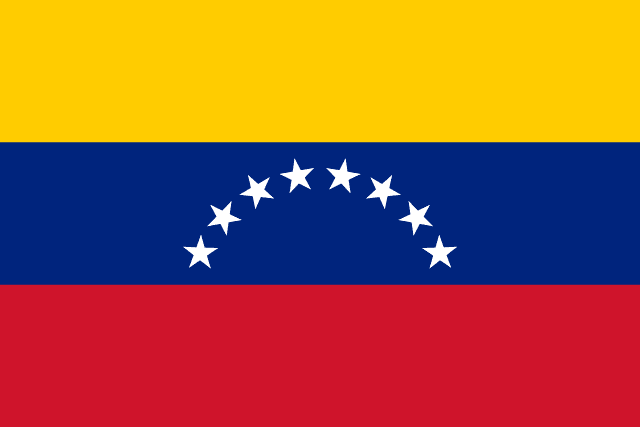
How to read these probabilities: Scores estimate the probability of a new armed conflict starting within the next 12 months. Ongoing conflicts can have a saturation effect, reducing the modelled probability of an additional conflict onset. A low or falling score does not imply less severe ongoing fighting or a safer country.
Population
28.52M
GDP
$99.66B
Currency
VES
Capital
Caracas
Land area
916.45K km²
Official languages
Spanish
Risk assessment
Risk profile
The 12-month probability of a new armed-conflict onset in Venezuela is 7.6%, making this a high risk. Venezuela’s history of political violence, armed criminal activity, contested institutions, severe economic stress, and politicised security forces supports continued exposure to internal conflict. Armed groups operating near the Colombian border and weak state control in some regions further increase the possibility that a political or security crisis could become sustained violence on Venezuelan territory.
Recent reporting highlights alleged cooperation among Colombian armed actors, Venezuelan officials, and illicit mining networks, with critical minerals reportedly routed to China. If accurate, these networks could provide financing, weapons access, and territorial incentives for armed groups, while the military, regional authorities, and central government remain the principal domestic power holders.
The largest uncertainty is whether elite competition and armed-group activity remain contained or become linked to a nationwide political rupture. Risk would rise through a disputed leadership transition, military fragmentation, or sustained clashes involving Colombian groups inside Venezuela; it would fall if security institutions preserve command unity and authorities contain armed networks without prolonged domestic fighting.
Strategic reasoning
- Venezuela’s history of institutional breakdown, political repression, economic crisis, and armed criminality creates multiple pathways from political contestation to sustained internal violence.
- Reporting on illicit mining and Colombian armed actors is the clearest escalatory signal, while continued control by the military and central authorities is the main stabilising factor. Fighting involving Venezuelan-linked actors abroad does not itself constitute a new onset in Venezuela.
Critical indicators
- October 2026 reporting in The Hill alleged that Colombian armed groups and Venezuelan officials are helping move critical minerals to China through illicit mining networks. The reported connection between resource extraction, armed financing, and state-linked actors raises the risk of localised violence expanding on Venezuelan territory.
- A 2026 analysis by The Rio Times described Venezuela’s power structure as involving the Rodríguez siblings, generals, governors, business interests, churches, and poorer constituencies after Maduro. This highlights the number of actors whose competition could affect military cohesion and the management of unrest.
- Polymarket assigned a 3.0% implied probability to a U.S. invasion of Venezuela by December 31, 2026, based on approximately 257,512 in volume. This addresses a specific interstate scenario and provides separate market context, not a revision of the 7.6% country-wide onset probability.
Probability trend
How the Venezuela estimate has moved
Probability8.0%7.8%7.6%
Sep 30
Oct 5
Oct 12
Oct 15
Oct 19
Date
Current conflicts
Source: UCDP
No active conflicts in Venezuela.
Regional context
Venezuela compared with its neighbours and region
Venezuela ranks number 44 of 196 in new conflict outbreak risk.
Land neighbours
Figures are each country's modelled probability of a new armed conflict on its territory within the next 12 months. Select any country to open its full profile.
Related coverage